




Starting antiviral care for feline infectious peritonitis (FIP) is just the beginning of the journey. Owners can monitor treatment response by tracking several clinical signs over time. You should not judge FIP recovery by just one symptom or a single blood test value. Instead, a reliable checkup looks at changes in appetite, body temperature, activity level, body weight, effusion, and laboratory findings over time.
At FIPRecover, we concentrate on the research, creation, and supply of GS-441524 and Molnupiravir products for FIP use. We also suggest that owners maintain steady daily logs. Working closely with a vet is vital when checking how well your pet is healing.
When Should You Expect Signs That FIP Treatment Is Working?
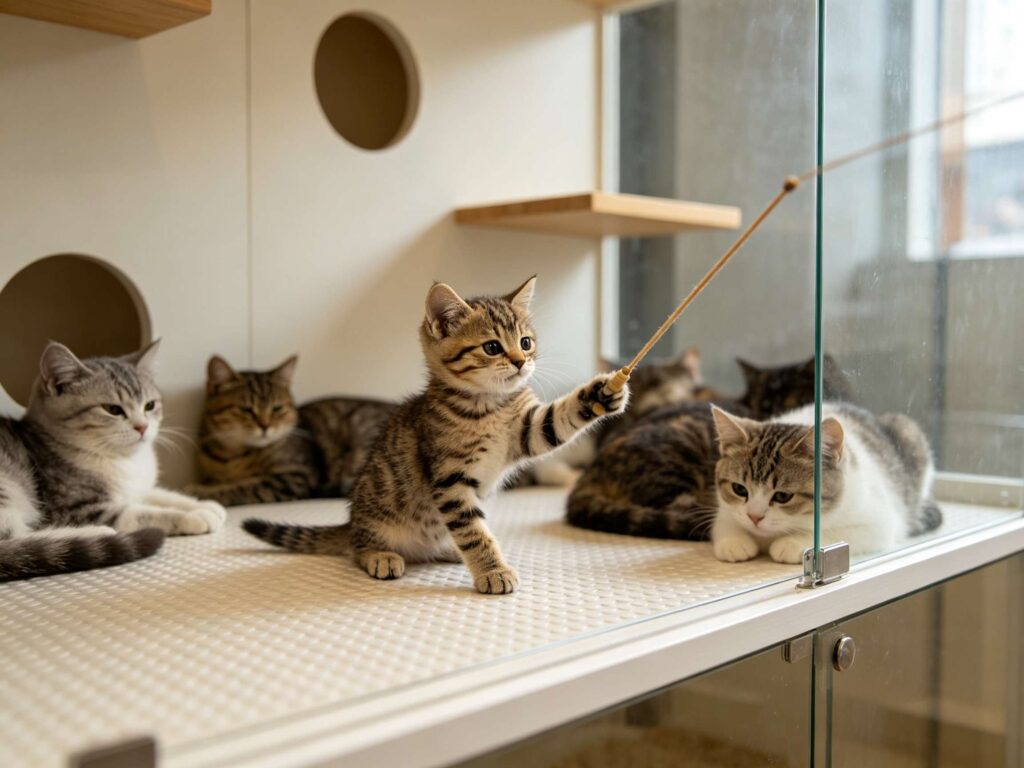
Monitoring how your cat acts is usually the first step. Clinical improvement, including resolution of fever and improved demeanour and appetite, often becomes apparent within the first few days of effective antiviral treatment. You should see their weight and overall health improve during the first week of care. If there is fluid buildup, a vet should check it again after two weeks. However, some hematologic and biochemical abnormalities may take several weeks to normalize.
| Treatment Stage | What to Monitor | Positive Trend |
| First few days | Demeanour, temperature, appetite | Improved demeanour and appetite; fever begins to resolve |
| First 1–2 weeks | Appetite, activity, body weight | Clinical condition improves and weight stabilizes or increases |
| Around 2 weeks | Abdominal or pleural effusion | Effusion substantially decreases |
| Weeks 2–4 and beyond | Hematology and serum biochemistry | Abnormalities progressively improve |
| Later treatment | Clinical and laboratory status | Sustained clinical stability |
Think of this timeline as a rough guide rather than a strict rule. Cats with brain issues, eye problems, or very severe cases may heal at a different pace. The main goal is not to ask if the cat is perfect yet. Instead, ask if the healing path is moving in the right direction.
5 Key Signs That FIP Treatment May Be Working
Appetite Begins to Improve
Reduced appetite or hyporexia is common in cats with active FIP, although the severity varies. Because of this, a renewed interest in their bowl is a great early sign of healing. The cat may show renewed interest in food and begin eating more voluntarily.
Always look at appetite along with other health markers. If a cat eats more but still has a high fever or trouble breathing, you must talk to your vet immediately.
Fever Resolves and General Comfort Improves
A long-lasting fever is a classic sign of FIP. With an effective antiviral response, fever commonly resolves and body temperature moves toward the normal range. Your pet might seem more relaxed and hide less often. They may resume normal grooming and show reduced lethargy.
Watching a trend over several days is much better than checking the temperature just once.
Energy and Normal Behavior Gradually Return
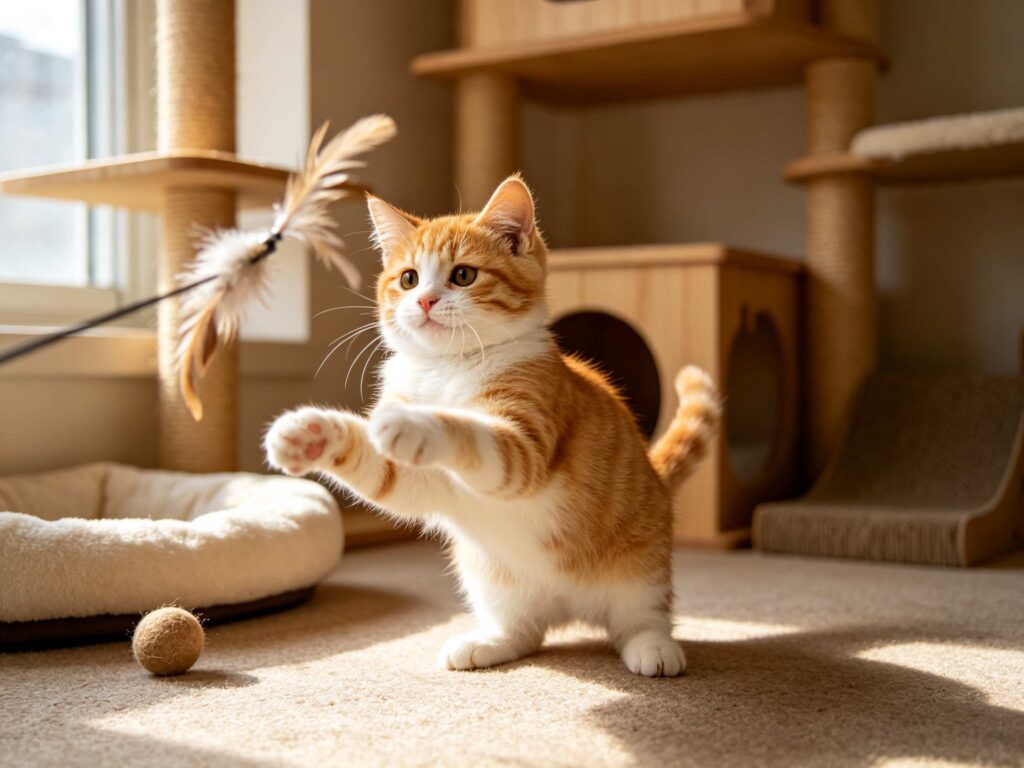
Monitoring demeanour and activity level is one of the simplest ways to track clinical progress at home. A healing cat will start to walk around more. They will react to people, explore the house, or go back to their favorite sleeping spots.
Recovery is not always a straight line. Having one sleepy day does not mean the medicine has stopped working.
Body Weight Stabilizes or Increases
Using a scale at home is very helpful during this time. A sustained increase or stabilization in body weight can support evidence of improved nutritional status and clinical recovery. These records also help vets adjust the dose of the medicine as the cat grows heavier.
Note that a short drop in weight is not always a bad sign. In cats with effusive FIP, a temporary decrease in body weight can occur as abdominal or pleural effusion is resorbed. This does not necessarily indicate treatment failure. Experts note that this often happens even when the treatment is working well.
Effusion or Disease-Specific Signs Improve
Each type of FIP shows different signs of getting better.
| FIP Presentation | Recovery Signs to Monitor |
| Wet/effusive FIP | Less fluid, easier breathing, more comfort |
| Dry/non-effusive FIP | Better appetite, weight gain, no fever |
| Ocular FIP | Clearer eyes and less inflammation |
| Neurological FIP | Better balance and steadier walking |
Persistent pleural effusion, abdominal distension or respiratory difficulty warrants prompt veterinary reassessment.
What Blood Test Changes Suggest FIP Treatment Is Working?
Physical changes often happen before laboratory abnormalities have fully normalized. This is why tests are most helpful when you look at them as a series of trends.
Blood-related and chemical imbalances usually get better step by step as the treatment goes on. To keep track of these changes, doctors might check the complete blood count (CBC), hematocrit or packed cell volume (PCV), and serum albumin. They also look at globulin, bilirubin, and the albumin-to-globulin (A: G) ratio.
It is important not to rely on just one specific ratio to decide if the treatment is working. Instead, a veterinarian will look at the whole clinical situation. They will combine these lab results with imaging reports to get a clear picture of the animal’s health.
Signs That Do Not Necessarily Mean FIP Treatment Is Failing
Some things might scare owners even when the cat is actually doing well:
Blood results may stay slightly off even when the cat looks healthy.
Globulin levels often stay high for a long time.
The cat might lose a bit of weight as belly fluid disappears.
Energy and hunger can go up and down from day to day.
Treatment response should be assessed using longitudinal clinical and laboratory trends rather than a single measurement.
Warning Signs That Need Veterinary Reassessment
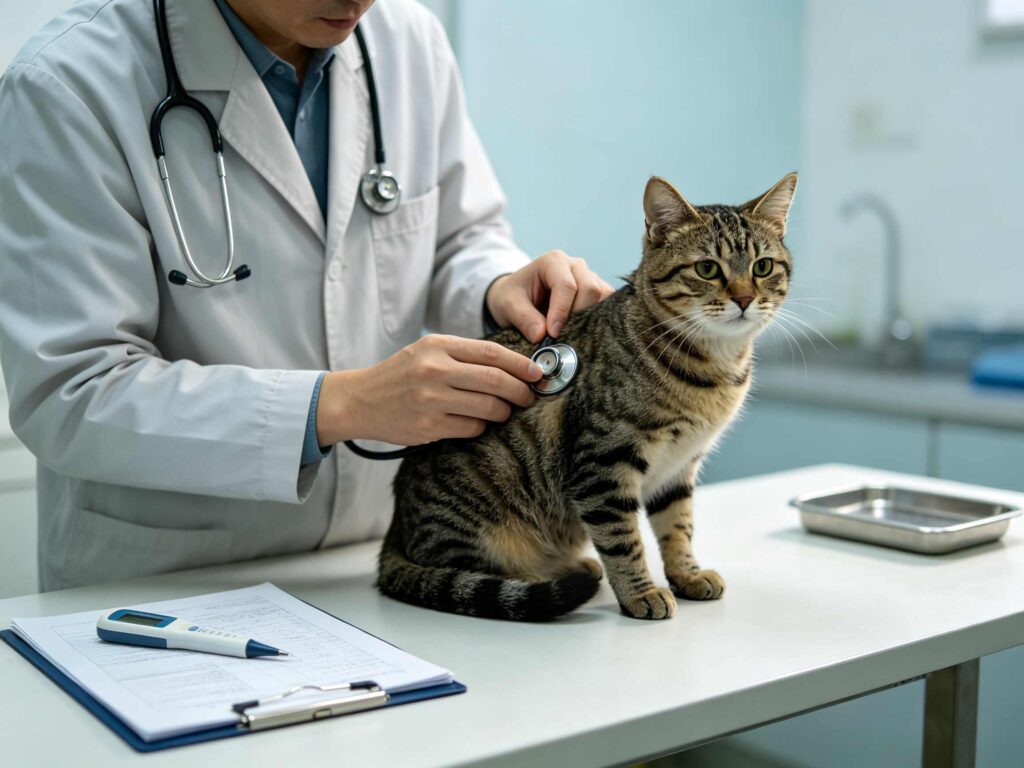
You must call the vet if the cat stops getting better or starts getting worse. Watch out for a returning fever, heavy weight loss, or more fluid buildup. Other red flags include trouble breathing, vomiting, refusing food, or new issues with eyes and balance.
If the expected clinical response does not occur, the veterinarian may need to reassess treatment adherence, dosage, drug formulation, concurrent disease, differential diagnoses or the original FIP diagnosis. The antiviral dose may require veterinary reassessment and adjustment. Vets often check for other infections if the expected progress stalls.
How to Track FIP Recovery at Home
Keeping a simple log makes your vet visits much more productive.
| What to Record | Suggested Frequency |
| Appetite and food intake | Daily |
| Activity and behavior | Daily |
| Breathing or abdominal changes | Daily |
| Eye or neurological changes | Daily if relevant |
| Body weight | Weekly or as advised by the veterinarian |
| Antiviral dose and administration | Every dose |
| Blood-test results | At veterinary reassessments |
Why Clinical Signs and Blood Tests Should Be Evaluated Together
The strongest indication of treatment response is a sustained pattern of clinical improvement supported by laboratory trends. While a good appetite is a start, it means more when the cat also has more energy and a normal temperature.
At FIPRecover, we believe monitoring should be based on facts and clear records. Antiviral products are a major tool, but appropriate dosing, treatment adherence and veterinary monitoring are also important for a full recovery.
How FIPRecover Supports Consistent FIP Treatment
At FIPRecover, we offer various product types to meet different research and care needs.
Our GS-441524 Injections 20 mg/mL and GS-441524 Injections 30 mg/mL are available for those using the injectable method. Product selection and dosing should be determined by a veterinarian based on the cat’s clinical presentation, body weight and treatment plan. FIPRecover provides different bottle sizes to ensure the therapy stays on track.
For those using pills, we supply 20 mg GS-441524 Tablets, 40 mg GS-441524 Tablets, 50 mg GS-441524 Tablets, and 60 mg GS-441524 Tablets. Oral administration may be more practical for some cats and can avoid the discomfort associated with repeated subcutaneous injections. The appropriate route should be determined by the treating veterinarian.
We also offer GS-441524 Powder for lab formulation. Our Molnupiravir list includes 40 mg Molnupiravir Tablets (EIDD-2801) and Molnupiravir Powder.
Consistent administration and appropriate dose adjustment are important components of successful antiviral treatment. At FIPRecover, we follow strict quality steps, including HPLC testing and batch tracking. We also provide COA and MSDS documents to verify our products.
Conclusion
Monitoring FIP treatment requires more than watching a single symptom or blood-test result. Changes in appetite, body temperature, activity, body weight, effusion, and laboratory findings should be evaluated together with veterinary guidance to assess treatment response.
Looking for Reliable FIP Treatment Support?
Explore FIPRecover’s GS-441524 and Molnupiravir product information and contact our team to learn more about available options.
FAQ
Q: How do I know if FIP treatment is working?
A: Monitor appetite, demeanour, activity level, body weight, body temperature and disease-specific clinical signs. Veterinary reassessment should also evaluate laboratory trends. Veterinary blood tests should also show a positive trend over time.
Q: Can blood tests still be abnormal if my cat is improving?
A: Yes, this is common. Clinical signs often improve before hematologic and biochemical abnormalities have fully normalized. Vets look for a trend of improvement rather than a single perfect test.
Q: What should I do if my cat is not improving during FIP treatment?
A: Speak with your vet immediately. The veterinarian may reassess treatment adherence, dose, drug formulation, concurrent diseases, differential diagnoses and the original FIP diagnosis.

Post Comment