




Feline Infectious Peritonitis (FIP) stands as a deadly condition resulting from a change in feline coronavirus (FCoV). This virus mostly strikes young kittens and cats whose immune systems are weak. The disease appears in different shapes, like the wet kind with extra fluid, the dry kind without much buildup, and harsher ones that hit the nerves or the eyes. Its twisted path and quiet starting signs make FIP one of the toughest cat illnesses to identify and control.
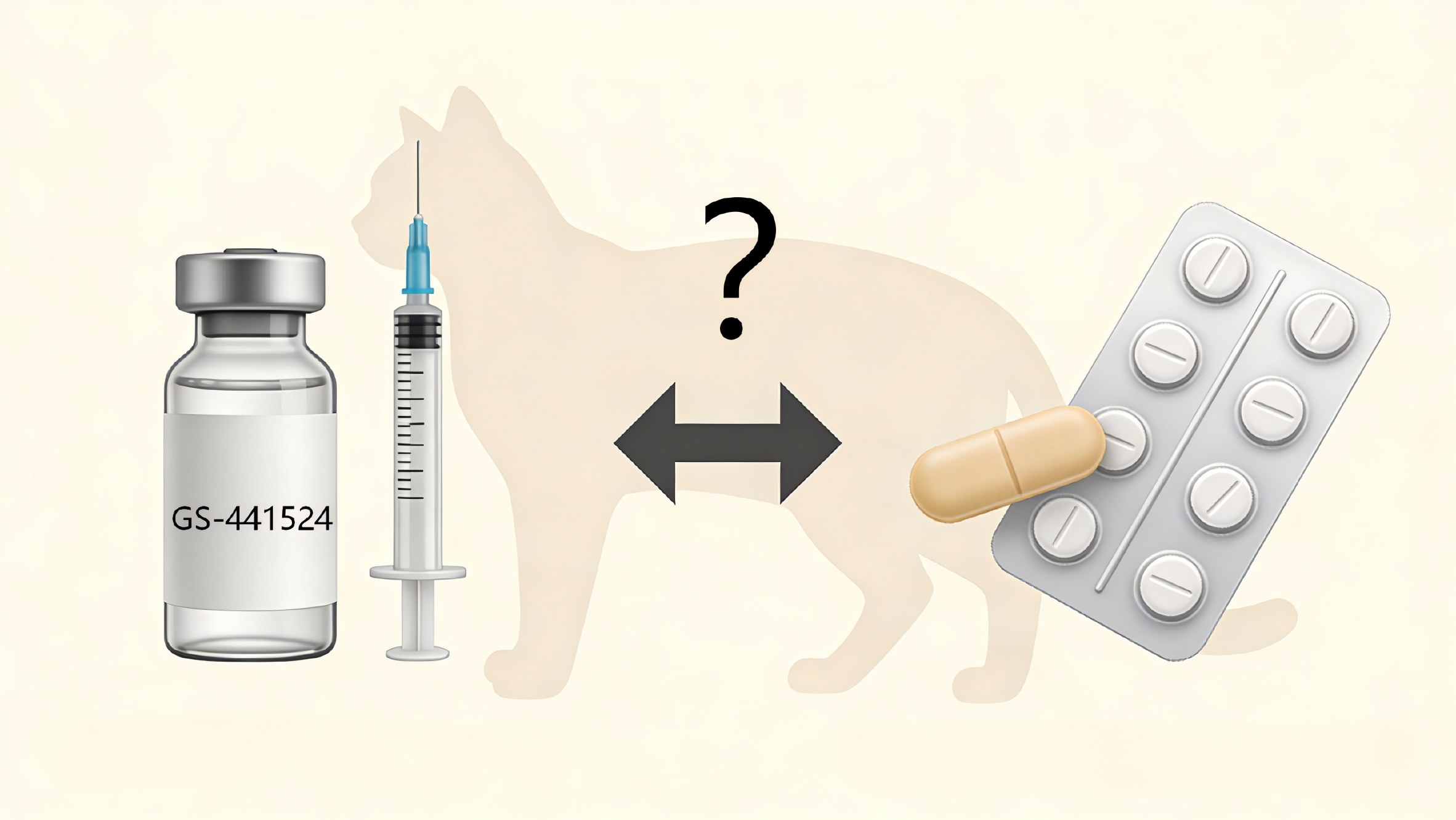
At FIPRecover, our work in research and development targets GS-441524. This nucleoside analog blocks the copying of viral RNA. The GS-441524 injection acts as a direct treatment for cat FIP. It stops the virus from growing at the root and supports cats in healing. Deciding on GS-441524 types—shots against pills—holds real weight in boosting how well the treatment works. That depends on the stage of the disease and the cat’s health.
Comparing Formulations: Injection vs Oral
Key Differences in Drug Delivery
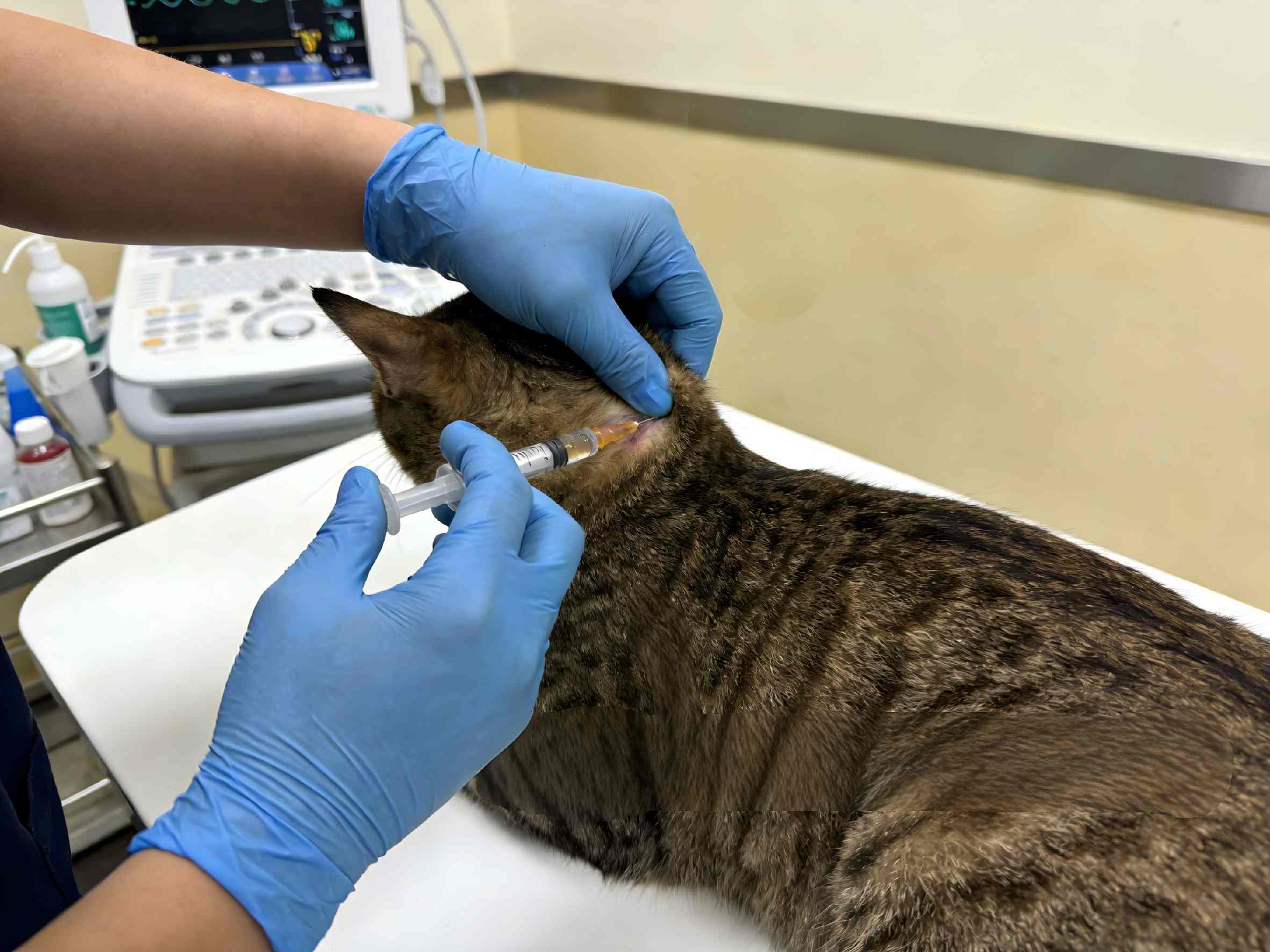
- GS-441524 injections go in under the skin. The injection delivers the drug directly into the bloodstream via subcutaneous injection. The GS-441524 20mg/ml injection proves quite useful, holds steady, and soaks up fast. It is built for under-the-skin delivery. This way skips the gut area. As a result, it grabs hold quickly and hits the body system without delay.
- Oral GS-441524 tablets depend on uptake via the stomach path. They offer ease for ongoing care in the home setting. Yet their start comes slower. Things like eating habits or gut condition can shift how well they perform.
Bioavailability and Absorption Characteristics
How much of the drug actually works marks a key point to consider.
- GS441 injection takes up speed. It fits cats in rough shape or ones skipping meals. Shots dodge the liver’s early breakdown. Thus, more of the working part stays intact.
- Oral tablets are easier to administer, but their efficacy can be reduced if there are gastrointestinal issues that affect absorption.
Pharmacokinetics of Each Formulation
After the dose, GS-441524 from shots climbs to the top blood amounts quicker. It keeps helpful levels up for a longer time. In the body, GS441524 builds an active triphosphate form. That keeps the blocking power going. So shots suit sharp or heavy cases better. Oral types might call for doses at shorter intervals or larger sizes. They aim to hit the same virus-stopping force.
Efficacy Based on Disease Stage
Early and Wet-Type FIP
For starting or wet-type FIP, oral tablets like 40mg GS-441524 Tablets often cover the needs. The tablet style suits cat owners well. They do it once each day. Giving it proves straightforward. Owners can use it plain or stir it into meals. Hence, oral GS-441524 fits owners who follow rules, and cats find it hard to stick with shots.
Neurological and Ocular FIP
In later cases touching the brain system or eyes, the drug must build higher amounts in the spinal fluid. For neurological or ocular FIP, tweaking the dose or stretching the treatment time becomes necessary.
For that reason, shot forms such as GS-441524 Injections【30mg/mL 10mL】earn strong backing. Their reach into the central nervous system stands out. This delivers solid, pointed care for cats under attack.
Advanced or Refractory Cases
Cats not gaining ground from single treatment or facing a return might profit from mixing both types. As an example, kick off with GS-441524 Injections【30mg/mL 6mL】 for the outset. Then move to tablets to hold steady. These stepped-up 30mg/ml bottles carry a firmer punch against the virus. They match cats locked in hard FIP fights.
Clinical Considerations for Vets
Patient-Specific Factors
Vets check age, weight, how bad the disease runs, handling of under-skin shots, and extra health issues. Some cats face light responses at the shot area. That includes puffing or ache. Certain side effects arise in spots. For example, soft red marks, swellings, or pain at the entry point.
Just as vital is the owner’s skill in daily shots against pill giving. For older keepers or touchy cats, tablets like 20mg GS-441524 Tablets handle practical needs better.
Treatment Compliance and Monitoring
Oral types usually reflect how owners stick to it. But they demand a tight hold on dose times. Shots bring surer drug paths in the body. They hinge on the right giving skills and swapping shot spots. This cuts down on skin bothers. Steady checks on blood signs like A/G ratio and SAA count big in both paths. They gauge healing steps and shape the treatment span.
Transitioning Between Forms Safely
Shifting from shot to oral types—or back—needs vet oversight. Match doses with care to skip low amounts in switches. A short overlap of both during the change often proves smart. For a safe handoff, overlap lasts 3-5 days. This keeps blood levels even.
Treatment Optimization Strategies
Combining Injection and Oral Therapy
Cats who are not responding adequately to one treatment method or show signs of relapse may benefit from a combination of both injection and oral therapy. Say a cat in sharp stage begins on GS-441524 Injections【30mg/mL 8mL】. Then ease into 60mg GS-441524 Tablets for wind-down. It brings bend and better results.
Adjusting Doses Across Forms
Dose changes mirror how well each absorbs. Oral doses may need to be higher to achieve similar blood concentrations as those obtained with the injection. From hands-on work, trials spot a core dose near 4 to 10 mg per kg daily. Run it for no less than 84 days. Yet fit it to the cat’s build and illness kind.
A 4 kg cat with early signs might take 20 mg orally daily. But for a 2 kg kitten with dry FIP, vets up it to 8 mg injection. Adjustments come from weight checks every two weeks and symptom logs.
Conclusion: Making Informed Decisions Based on Science
Picking GS-441524 shots or tablets draws from the cat’s signs, illness weight, and the owner’s practicality. Knowing the drug action gaps in each type helps vets shape plans that increase win chances.
At FIPRecover, we stick to supplying clean GS-441524 goods with firm quality steps. We welcome cat owners and vet workers to contact us for custom tips on single cases. Sharing details like recent blood work or daily habits lets us suggest precise paths.
FAQ
Q: What is the main difference between the GS-441524 injection and oral pills?
A: The injection delivers the drug directly into the bloodstream with higher bioavailability, while oral pills pass through the digestive system, which can reduce absorption.
Q: Which form is better for neurological FIP?
A: For neurological or ocular FIP, dosage optimization or longer treatment duration may be necessary. Injections are generally preferred due to better central nervous system penetration.
Q: Can I switch from injection to oral pills during treatment?
A: Yes, under veterinary supervision. Transitioning between formulations should involve dose adjustments to ensure sustained therapeutic levels.
Q: Is oral GS-441524 effective for all types of FIP?
A: Oral FIPRecover tablets are effective for mild-to-moderate cases such as early wet-type FIP. However, severe or neurological cases often require injectable formulations or higher doses.
Q: How do I determine which form of GS-441524 is right for my cat?
A: Consult your veterinarian. They will evaluate your cat’s symptoms, disease stage, weight, and your ability to administer treatment before recommending a suitable formulation.

Post Comment